First Aid for Fractures | Quick Guide to Handle Broken Bones
Broken bones, also known as fractures, can happen unexpectedly—from car crashes to simple falls. While they aren’t always life-threatening, fractures demand immediate attention to prevent further injury, ease pain, and support healing. Knowing how to respond can make a huge difference.
If you're dealing with an emergency right now, please scroll down to the "Emergency First Aid" section for quick, practical help.
What Is a Broken Bone?
A broken bone occurs when a force stronger than the bone’s structure causes it to crack, snap, or shatter. These injuries can result from trauma, falls, sports accidents, or even medical conditions like osteoporosis, which weakens the bones.
Fractures can range from simple, closed breaks to severe, open fractures where the bone pierces the skin. Commonly affected areas include the wrist, ankle, hip, and long bones like the femur.
Signs and Symptoms of a Fracture
Suspect a fracture? Look out for these signs:
- Sharp or intense pain at the injury site, especially when moving
- Swelling, bruising, or visible deformity
- Numbness or tingling near the area
- A bone sticking out through the skin
- Difficulty using or moving the affected limb
- Discoloration (bluish or pale skin)
- Heavy bleeding (especially in open fractures)
Emergency First Aid
If you think someone has broken a bone, stay calm and follow these key steps:
1. Ensure Safety
First, make sure the area is safe for both you and the injured person. Don’t move them unless there's an immediate danger (like a fire or oncoming traffic).
2. Stop Any Bleeding
- Use a clean cloth, bandage, or piece of clothing to apply gentle pressure.
- If a bone is protruding through the skin, apply pressure around (not on) the bone.
- Elevate the area if possible, to slow bleeding.
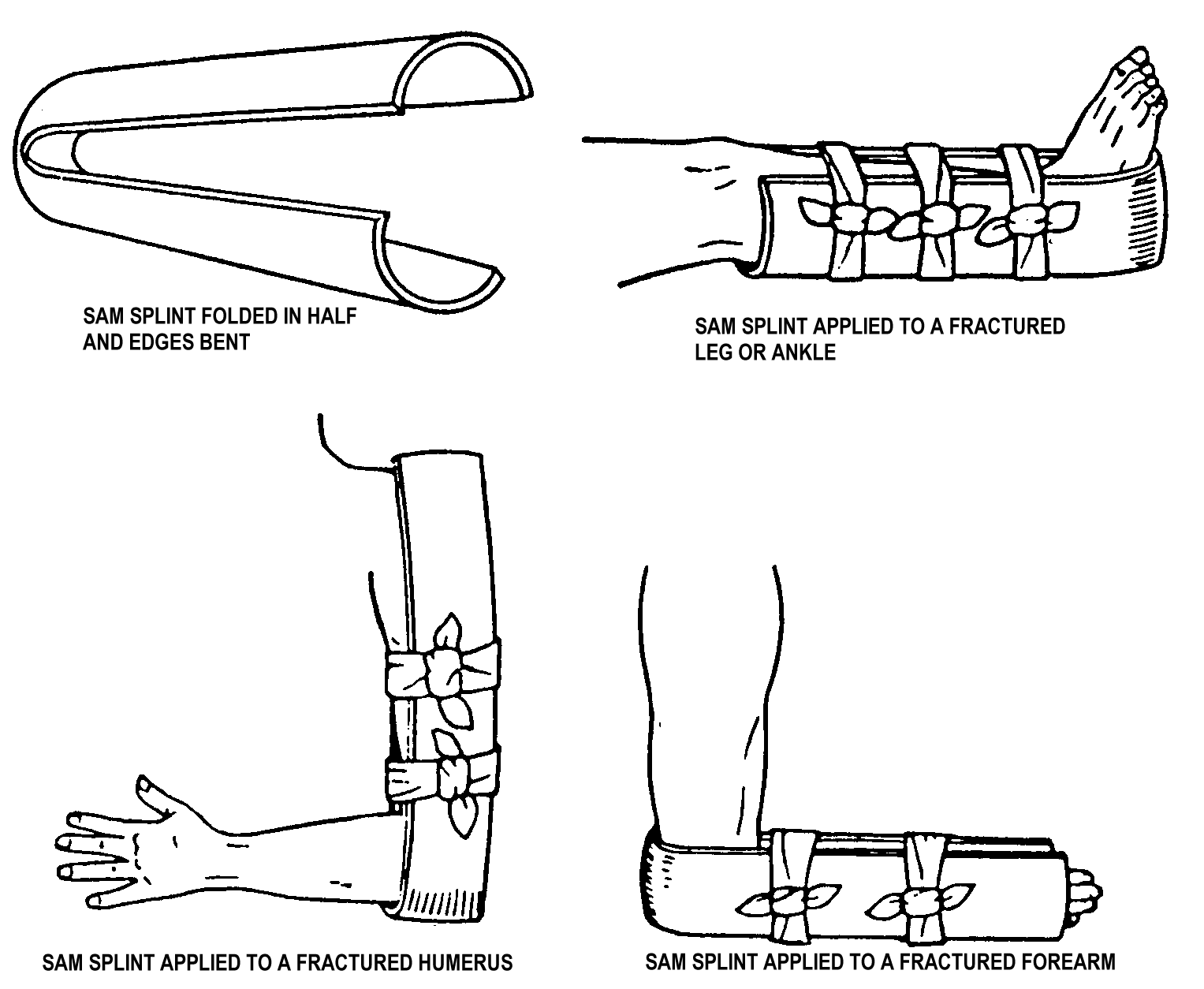
3. Immobilize the Injury
DO NOT attempt to realign the bone.
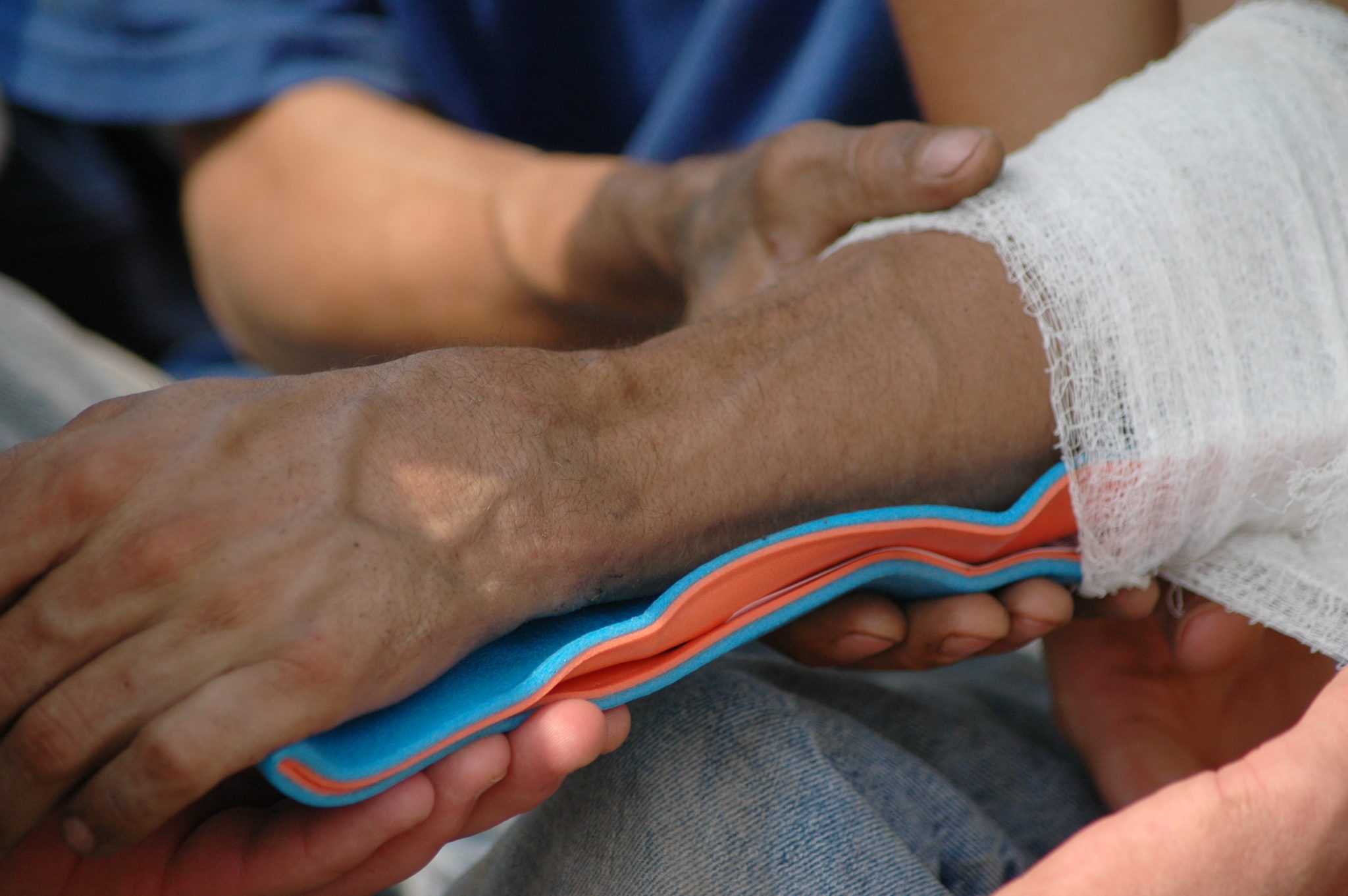
- Use a splint to support the limb by securing it above and below the fracture. Improvise with items like a rolled magazine, a board, or even a stick wrapped with cloth.
- Use a sling for arm or collarbone injuries.
- For suspected spinal or neck injuries, do not move the person—keep them as still as possible.
4. Apply a Cold Compress
- Wrap ice or a cold pack in a towel and apply it to the area for 10–15 minutes at a time. This helps reduce swelling and pain.
- Never place ice directly on the skin.

5. Treat for Shock
Signs of shock include pale or cold skin, rapid breathing, fast weak pulse, bluish lips or fingers, confusion, dizziness, fainting, clammy skin, dilated pupils, anxiety, low blood pressure, little or no urine, loss of consciousness
- Keep the person lying down.
- Elevate their legs slightly if no spinal injury is suspected.
- Keep them warm with a blanket or coat.
- Speak calmly and reassure them.
6. Avoid Giving Food or Drink
They may require surgery, so it’s best to keep them from eating or drinking until assessed by medical professionals.
When to Call Emergency Services
Dial emergency services immediately if:
- The person is unconscious or not breathing (start CPR if necessary).
- The bone has broken through the skin.
- There is significant bleeding or signs of shock.
- You suspect a fracture in the head, spine, neck, ribs, or pelvis.
- A limb appears deformed or unusable.
- The injured area is numb, cold, or discolored.
- If the injury seems less severe, but the pain is persistent and movement is limited, get the person to an emergency department or urgent care for evaluation.
Types of Bone Fractures
While all fractures require medical attention, here are the main types:
- Closed (Simple) – Bone is broken but skin remains intact.
- Open (Compound) – Bone pierces the skin; higher risk of infection.
- Greenstick – A partial break common in children.
- Hairline (Stress) – Tiny crack from repetitive stress, often in legs or feet.
- Comminuted – Bone is shattered into multiple pieces.
- Avulsion – A piece of bone is pulled off by a tendon or ligament.
- Compression – Bones are crushed together, often in the spine.
:max_bytes(150000):strip_icc():format(webp)/Fracture-WhattoKnowAboutThisInjury-v2-5936ff9b9dd048e9b8be221450f994d8.png)
Final Thoughts
Broken bones can be scary—but with the right first aid, you can stabilize the injury and potentially prevent complications. Remember: Do not try to “fix” the bone yourself. Your job is to keep the person safe, calm, and still until medical help arrives.
Share this guide with friends and family—you never know when it might save a limb or even a life.