How To Perform CPR
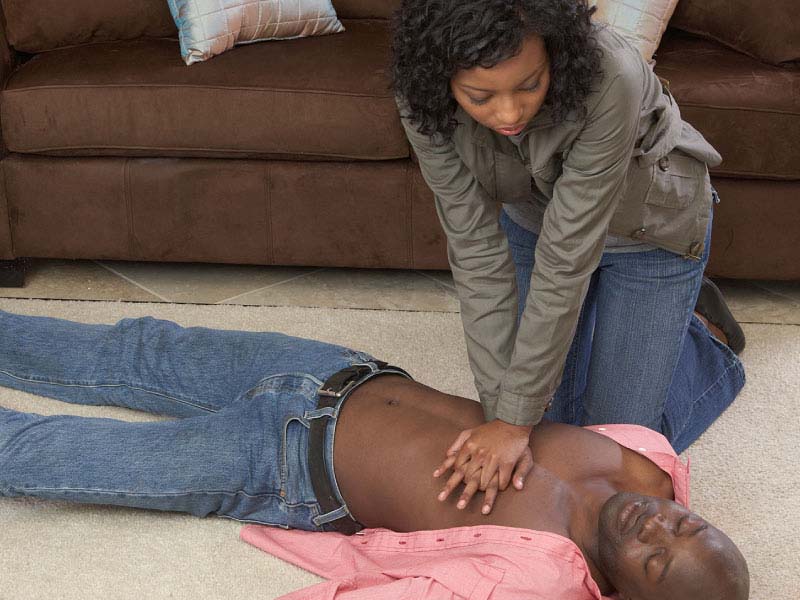
When someone is not conscious and or is not breathing normally, call the emergency numbers and start cpr immediately. The respondent on the emergency lines might give you some lifesaving instructions whiles they head to your direction. CPR could be perform alone or with rescue breaths. It could also vary slightly based on the age group of the individual receiving it.
CPR On Adults
It’s better to perform CPR without rescue breaths (also known as hands only CPR) if you haven’t been trained how to perform CPR. If you’re not sure, do CPR only.
Hands Only CPR
1. Position the person on their backs and kneel to their level. Place the heel of your hand (usually the dominant one) on their breatbone (the bone at the centre of the chest where your ribs appear to meet). Place the palm of the other hand on the first hand and interlock your fingers. Position yourself such that your shoulders is directly above your hands.
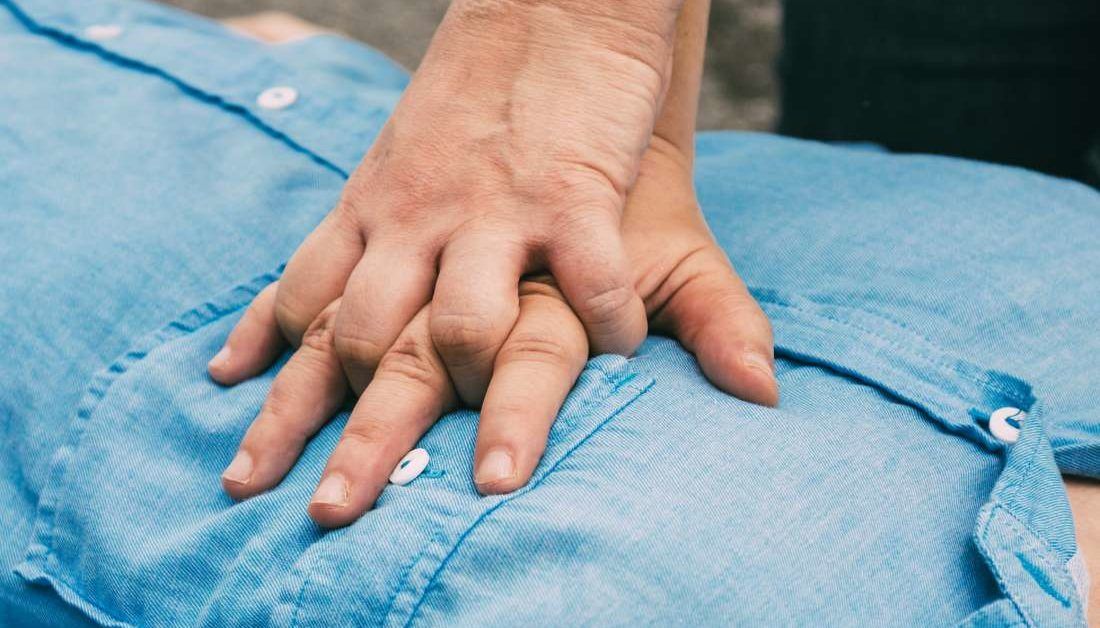
2. Use both your body weight and your arms to push down on the chest by about 5cm. Release the compression and let the chest come back to it’s position, and then repeat the cycle again for about 100 to 120 compressions per minute until the ambulance or emergency services arrive to take over.
CPR With Rescue Breaths
1. With the patient lying down, place the heel of your hand on the breast bone and the palm of the other hand on top of the first one with fingers interlocking. Compress the chest with your body weight and your arm as your source of compression force. The compression should be about 5cm and at the rate of 100 to 120 times per minute. However after every 30 compressions move to do rescue breaths.
2. Rescue Breaths: To perfrom rescue breath, tilt the victim’s head a little and lift their chin slightly with 2 fingers. Pinch the person’s nose. Seal their mouth with yours and blow steadily and firmly into their mouth for about 1 second. Do this twice and check for chest rise every time you do.
3. Repeat the 30 compressions and 2 rescue breaths until they recover or until help arrives.
CPR On Children
Children are more likely to have an airway problem so CPR on children should be perform with rescue breaths.
Children Over 1 Year
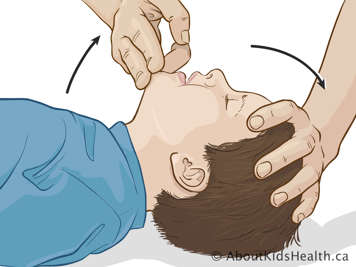
1. Open their airway by gently tilting the head with one hand on the forehead and the other on their chin. Remove any visible objects or obstructions in the mouth and nose.
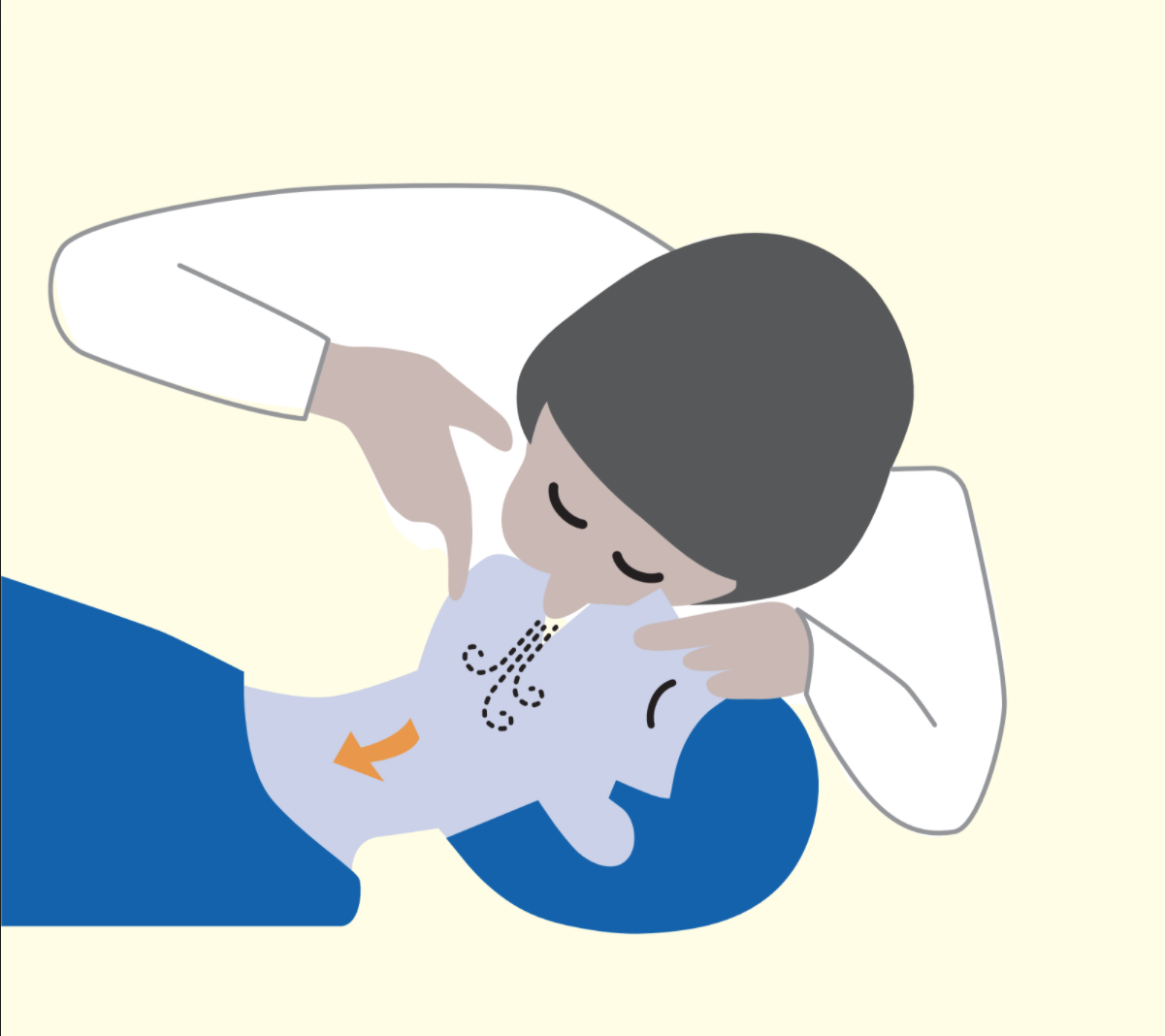
2. Pinch their nose, seal their mouth with yours and blow steadily and firmly into their mouth. Observe chest rise and fall. Give 5 rescue breaths initially.
3. Place the heel on one hand in the middle of their chest and give them a 5cm compression on the chest. At the other hand if one hand can’t achieve this depth.

4. The compressions should be at the rate of 100 to 120 times per minute. However, after every 30 compressions give 2 rescue breaths.
5. Repeat the 30 compressions and 2 rescue breaths till the child begins to feel well or until emergency help arrives.
Infant Under 1 Year
1. Open the infant’s airway by placing a finger on their forehead and gently tilting their forehead and lifting their chin. Remove all visible obstructions in the mouth and nose.
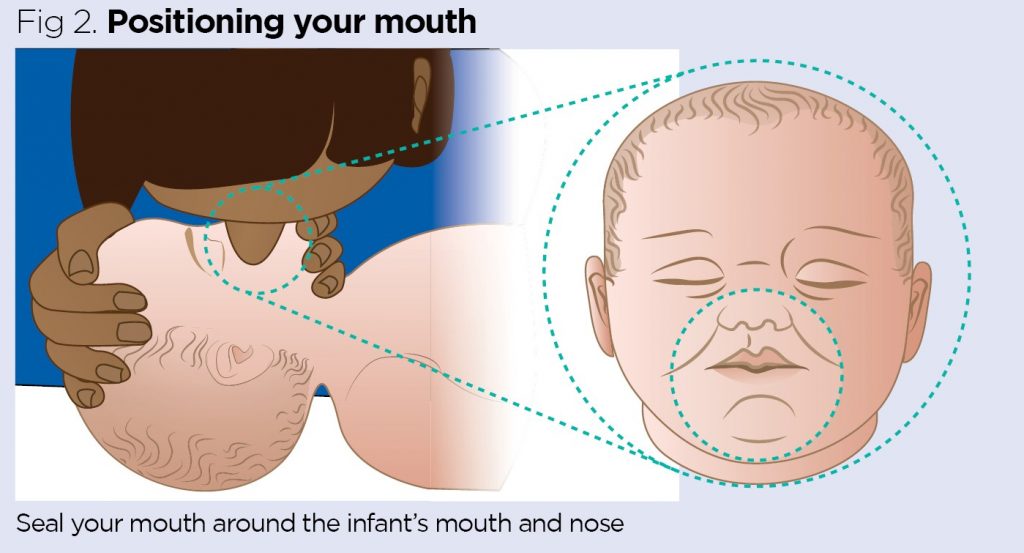
2. Place your mouth over their mouth and nose and blow into them steadily and firmly checking that their chest rises. Give 5 initial rescue breaths.
3. Place 2 fingers in the middle of their chest and give them a 4cm compression, approximately 1/3 of their chest diameter. Use the heel of one hand if you can’t achieve the 4cm with two fingers.
4. Whiles compression them at a rate of 100 to 120 times per minute, given them 2 rescue breaths after every 30 compressions. Continue this cycle until the child recovers or medical health arrives.