Your Guide Prostate Health

The prostate, though small in size, plays a significant role in men’s health—particularly in urinary and reproductive function. Yet for many men, conversations around prostate health remain rare, often limited to clinical visits or avoided altogether due to discomfort or lack of awareness.
As men age, the prostate becomes increasingly prone to a variety of conditions, including benign prostatic hyperplasia (BPH), prostatitis, and prostate cancer. While some of these issues are benign and manageable, others can impact quality of life or develop into more serious health concerns if left unchecked.
This guide aims to break down the essentials of prostate health—what the prostate does, the common issues that affect it, who’s at risk, and how to recognize early signs of trouble. More importantly, it emphasizes the value of regular screening, healthy lifestyle habits, and informed decision-making in maintaining lifelong prostate wellness.
The Prostate, and Prostate Tumors
The prostate is a small, walnut-sized gland located just below the bladder. It surrounds the urethra and helps produce semen. Prostate tumor starts when cells in this gland begin to grow abnormally. While some growths are harmless (benign), others are cancerous and can spread to other parts of the body.
In most cases, prostate cancer grows slowly. If it stays confined to the prostate, treatment is usually successful. But when it spreads—especially to the bones or lymph nodes—it becomes harder to treat.
Who’s at Risk?
Prostate cancer can happen to any man, but some people face higher risks:
-
Age: Risk increases significantly after age 50.
-
Family History: If your father, brother, or grandfather had prostate cancer, your risk goes up.
-
Race: Black men are more likely to get prostate cancer and often have more aggressive forms.
-
Obesity: Being overweight may raise the risk of advanced disease.
-
Smoking: Some studies suggest a link between smoking and recurrence after treatment.
What Are the Signs?
Prostate cancer often doesn’t cause symptoms in the early stages. But as it progresses, you might notice:
-
Frequent urination, especially at night
-
Trouble starting or stopping urination
-
Weak urine stream
-
Blood in urine or semen
-
Pain or burning while urinating
-
Painful ejaculation
-
Dull pain in the lower back, pelvis, or thighs
-
Unexplained fatigue or weight loss
-
Bone pain
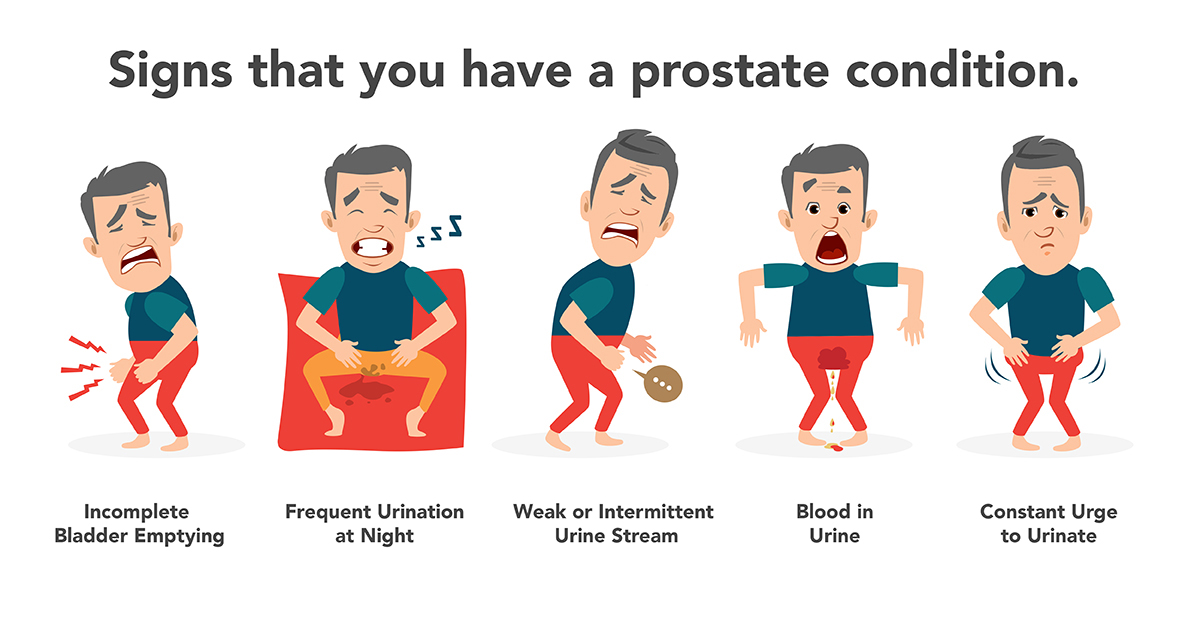
Many of these symptoms can also be caused by non-cancerous conditions. But if you notice anything unusual, it’s important to talk to a doctor.
How Is It Detected?
Prostate cancer is easiest to treat when caught early. That’s where screening comes in:
PSA Blood Test
This test checks the level of prostate-specific antigen in your blood. Higher levels can signal prostate problems, including cancer.
Digital Rectal Exam (DRE)
A doctor examines the prostate through the rectum to check for abnormal size, shape, or texture.
When to Start Screening
-
Most men should begin screening around age 50.
-
If you’re Black or have a family history, consider starting between 40 and 45.
Screening can lead to early detection—but it’s not perfect. Your doctor may recommend an MRI or biopsy if results are unclear.
What If You’re Diagnosed?
Treatment depends on the stage of cancer:
Early Stage
-
Active surveillance: Regular checkups to monitor the cancer
-
Surgery: Removing the prostate
-
Radiation therapy: Targeting and destroying cancer cells
Locally Advanced Stage
-
Hormone therapy: Reduces testosterone to slow growth
-
Often combined with surgery or radiation
Advanced Stage
-
Hormone therapy, chemotherapy, or targeted therapy
-
Focus on managing symptoms and slowing progression
Side effects may include urinary changes or erectile dysfunction, but options exist to manage them.
Can You Lower Your Risk?
While there’s no guaranteed way to prevent prostate cancer, you can reduce your risk with smart lifestyle choices:
-
Eat Healthy: Load up on fruits, vegetables, and whole grains
-
Stay Active: Regular exercise keeps your body strong and your weight in check
-
Maintain a Healthy Weight: Especially important after age 50
-
Quit Smoking: Reduces recurrence risk and improves overall health
-
Talk to Your Doctor: In some high-risk cases, medications may help reduce risk
Living with Prostate Cancer
A diagnosis can bring emotional ups and downs. But many men live long, fulfilling lives with prostate cancer—especially when it’s detected early.
If you’re feeling anxious, depressed, or overwhelmed, you’re not alone. Talk to your doctor, connect with support groups, or reach out to friends and loved ones.
Support resources and helplines are available—especially for Black men, who face higher risks but may be less likely to seek early care.
Take Charge of Your Health
Prostate cancer is common—but beatable. Know your risk, get screened if you’re eligible, and make lifestyle choices that support long-term health.
It’s never too early to start the conversation.